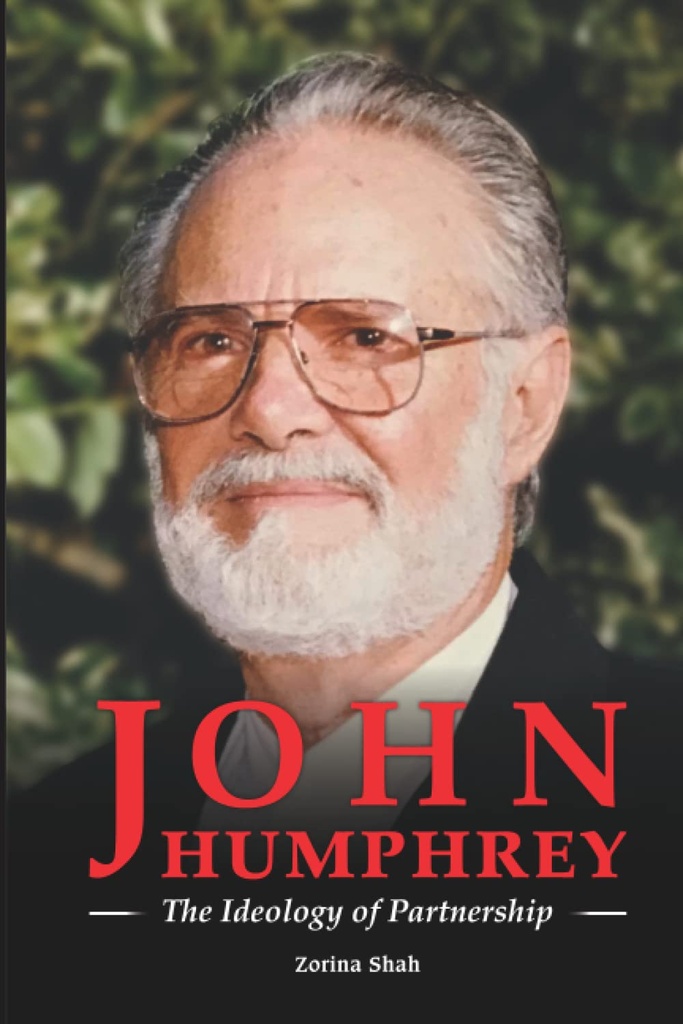
John Humphrey - The ideology of partnership - Zorina Shah
John Humphrey was born into a wealthy family, in one of Trinidad and Tobago's Magnificent Seven homes, before the Second World War. In telling his story, this book explores a basic question. Why did someone who did not know poverty, who went to the best schools in Trinidad, England and Canada gravitate to the cause of the poor. At an early age Humphrey was sent to the sanatorium (St. Ann’s Hospital) in the capital city of Port of Spain when he began to articulate for a just society. He was called a Communist. The treatment he received terminated what was a promising swimming career as he had represented his country at swimming and water polo. Humphrey distinguished himself as an artist, designing Carnival bands and as an architect, his work dotting the country's landscape. He identified with the oppressed masses in the Black Power uprising of 1970 and again in workers' strikes in the mid-seventies, eventually being appointed to the country's Senate, then its House of Representatives and being part of the Cabinet on two separate occasions. His name is synonymous with Sou Sou Land, a programme of low-cost land for the landless and as a government minister, he introduced a system of Certificate of Comfort to confront the country's housing problems through the regularisation of squatters. This is the story of a man's love for is country, taking the reader from the colonial era in Trinidad and Tobago, journeys across the Atlantic in hazardous times, the road to independence and the struggle for justice and equality in a multi-cultural society.